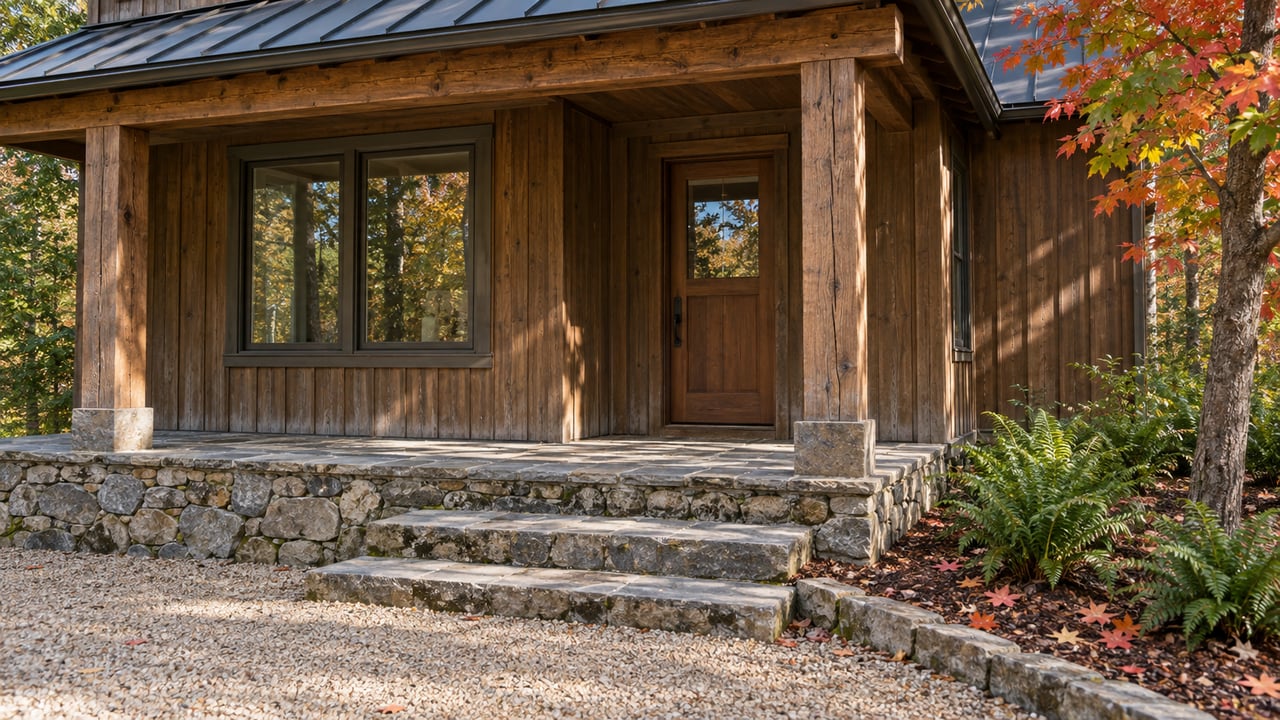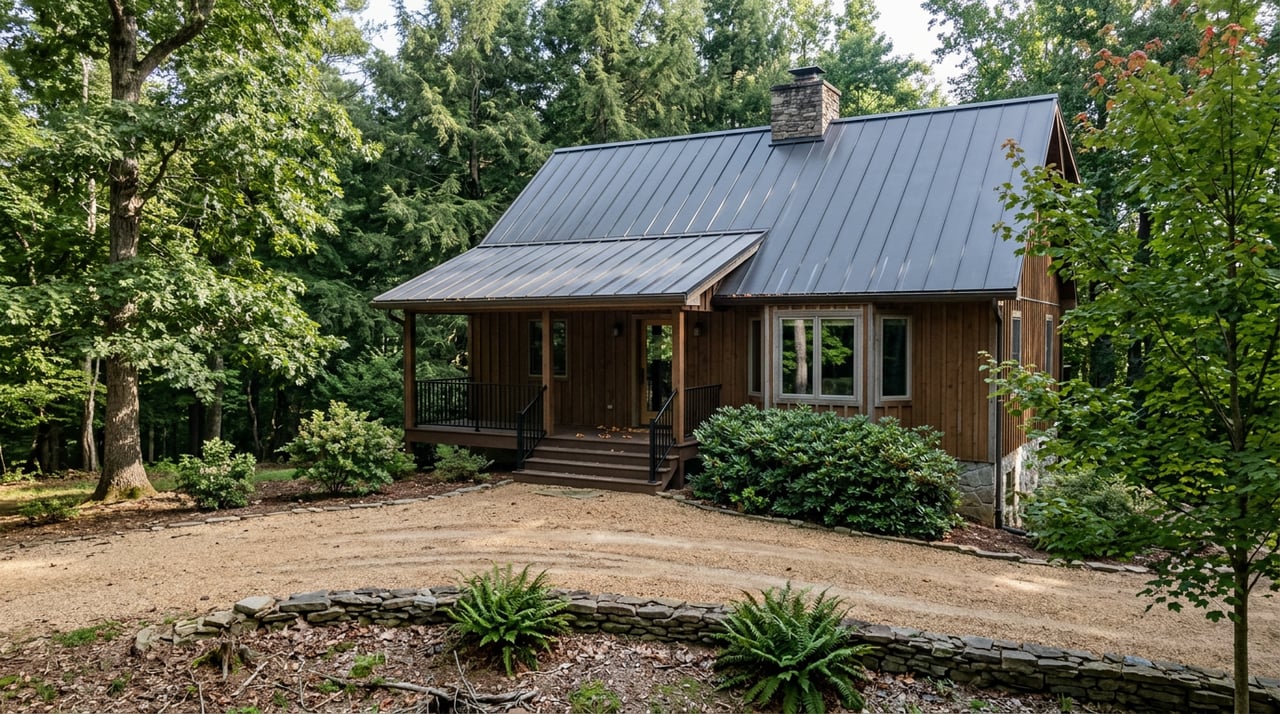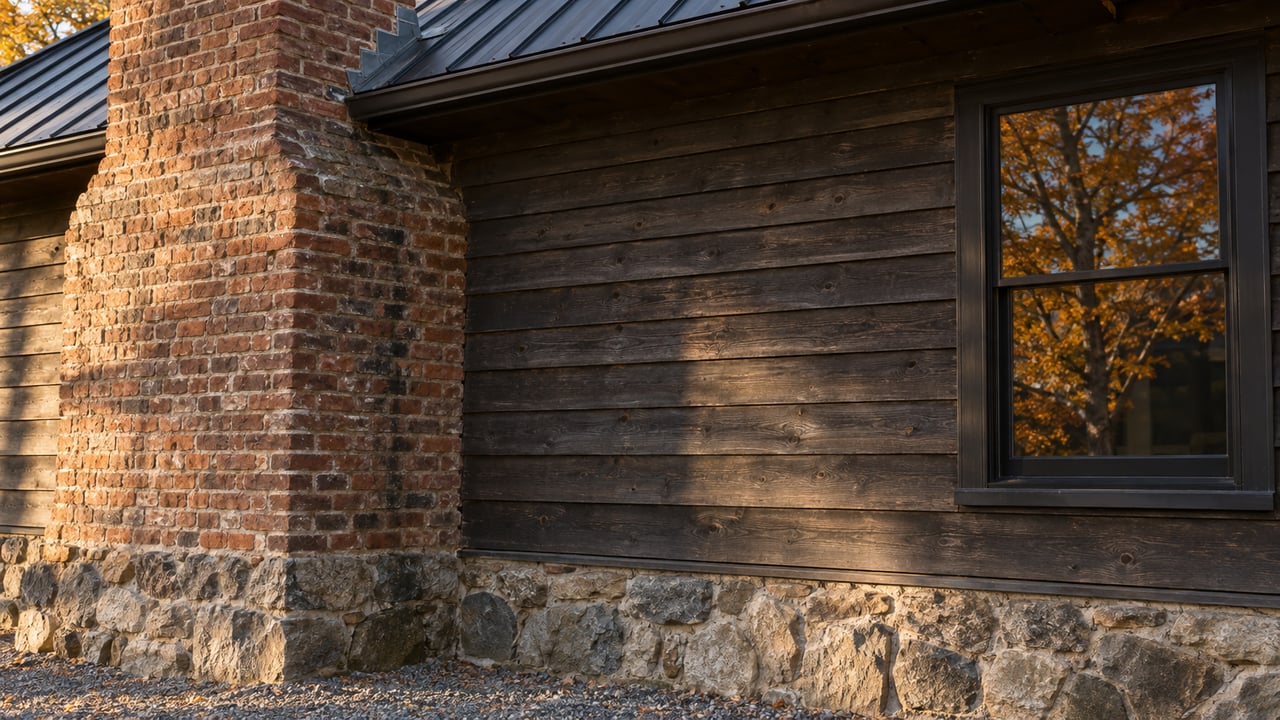
Ten minutes outside Murphy, at the center of the John C. Campbell Folk School campus, there's a chimney built into a building called the Community Room. It went up in 1927, and the brick came from a specific place: Cherokee County's own courthouse, which had burned the year before. Someone salvaged what was left and hauled it to Brasstown. The Community Room became the anchor of what's now Keith House, and the chimney is still standing in the middle of a festival that fills that same campus every October.
Most people who drive out for the Fall Festival don't know that. They know the craft vendors, the woodcarving demonstrations, the smell of kettle corn drifting across a 270-acre campus. What they're standing next to, without knowing it, is a piece of downtown Murphy's own history, rebuilt somewhere else.
What Actually Burned
The 1926 fire at the Cherokee County Courthouse isn't a footnote anywhere in Murphy's current downtown. There's no marker, no plaque on Valley River Avenue pointing back to it. The building that replaced it has been rebuilt, remodeled, and repurposed enough times that the fire is mostly a line in local history records now. But the brick didn't disappear. It went to a school that was two years old at the time, founded in 1925 by Olive Dame Campbell and Marguerite Butler after they spent eighteen months studying folk schools in Denmark, Norway, Sweden, and Finland. The Community Room was one of the first permanent structures the young school built, and it needed a chimney. Cherokee County's courthouse, freshly burned, supplied one.
That's the kind of detail that doesn't survive in tourism copy about the Folk School Fall Festival, because it isn't about the festival. It's about what the campus is made of. But it matters for anyone who lives in Cherokee County, because it means the county's own civic history is sitting in Brasstown, load-bearing, still in daily use, while the building it came from downtown has been gone for a century.
A Festival Built to Outlast Its Founders
The Fall Festival itself is younger than the chimney by almost fifty years. It started in 1974, and it has run every single year since, with two exceptions: 2020 and 2021, when the pandemic shut it down like it shut down everything else. That means for anyone who has lived in Cherokee County longer than a few years, this festival has been a fixed point on the October calendar with only two gaps in over five decades. It's not a new attraction competing for a weekend. It's closer to a school break or a tax deadline, a date that organizes itself around the rest of the month rather than the other way around.
Last year's festival carried extra weight. It doubled as the kickoff for the Folk School's 100th-anniversary campaign, since the school itself was founded in 1925. Bethany Chaney, the school's executive director, framed the milestone as one that belongs to "everyone who has been part of the Folk School's story," and the celebrations that started at that festival are still running. This year's Fall Festival, set for October 3 and 4, 2026, falls squarely inside that same centennial stretch. It's not a new decade starting fresh. It's the second lap of a lap that's already been announced.
What the Weekend Actually Looks Like
The festival draws more than 13,000 visitors across the two days, arriving from Tennessee, Virginia, North Carolina, South Carolina, and Georgia. That's not a crowd contained to one field. It spreads across the full 270-acre campus, through five separate demonstration sites: a stage near the Enameling Studio, the Woodcarving Studio itself, the area outside Davidson Hall's Wet Room, the Woodworking porch, and the Blacksmith Shop. Two stages, the Festival Barn and Shady Grove, run bluegrass, gospel, Celtic, and folk music continuously, alongside clogging, Morris, Rapper Sword, and Garland dance performances.
The woodcarving in particular has its own history layered underneath the festival's. The Brasstown Carvers tradition goes back to 1931, when the school started holding twice-weekly carving sessions on campus. Those same carvers still sell work at the Craft Shop, which stays open year-round and represents more than 500 juried regional artists, separate from the roughly 230 craft vendors and 29 food vendors who set up specifically for festival weekend.
Parking is free, and the school runs an on-campus shuttle so visitors aren't walking the full length of the property. On Saturday only, there's an additional overflow lot at Little Brasstown Baptist Church, with its own shuttle loop back to the main gates. The event runs rain or shine. Pets are allowed but not encouraged, since the crowds and the heat make it a hard day for a dog on a leash, and the school's own event page asks attendees who do bring pets to stay near water stations and clean up after them.
Lodging fills fast enough that the school's own event listing points visitors toward hotels in Murphy, Blue Ridge, and Hiawassee, with a specific note that Murphy's Sunset Motel is small and tends to book up quickly. Beyond that, it's VRBO and Airbnb, or nothing.
The Weekend Downtown Waits For
Here's where the calendar gets interesting for anyone who actually lives in Murphy rather than driving in for the day. The Fall Festival lands on the first weekend of October, before downtown Murphy's own October lineup kicks in. The following Saturday, October 10, downtown runs two of its own events back to back: Second Saturday Shop and Sip from 2 to 5 p.m., and Murphy Music and Brews from 3 to 8 p.m. Later in the month, on Halloween itself, downtown hosts A Murphy Haunting from 4 to 7 p.m.
That means Cherokee County's October doesn't have one big weekend. It has two, roughly a week apart, pulling attention in opposite directions. The first sends people out to Brasstown, toward a campus built partly from the county's own salvaged brick. The second pulls them back into downtown Murphy's own storefronts and sidewalks. Neither event is competing with the other exactly, but they do split the month's attention in a way that's easy to miss if you're only tracking one of them.
Why the Detail Matters Beyond the Weekend
None of this changes what the festival is on the surface: a two-day arts and craft gathering with live music, demonstrations, and food. But knowing that the Community Room's chimney was built from courthouse brick changes what the campus means to someone who's spent their whole life in Cherokee County. It's not borrowed history. It's the same history, moved ten minutes down the road and put back to work.
The festival's own permanence adds to that. A tradition that's run every year since 1974, minus two years nobody controlled, isn't marketing itself as new or trending. It's simply still here, the way the chimney is still standing, doing the same job it's done since 1927.
If you're the kind of person who wants to understand why a fireplace matters before you ever plan to own one, the Randy Dockery Team spends as much time tracking Cherokee County's small history as its property lines. Stop by when you're ready to talk about either one.